
What happens at a skin check
The whole thing takes 15 to 30 minutes, nothing about it hurts, and you do not need a referral. Here is exactly what to expect, so there is one less reason to put it off.
Who should book one
Living in Queensland is reason enough on its own. Our UV stays high all year round and 2 in 3 Australians will be diagnosed with skin cancer by age 70. If none of the boxes above apply to you, regular checks still make sense, and your doctor will tell you how often to come back.
How to prepare
Nothing complicated. A few small things help your doctor see everything clearly.
Come with clean skin
Skip makeup, fake tan and nail polish if you can. They cover exactly the kind of detail your doctor is looking for.
Wear simple clothes
You will undress down to your underwear for a full body check, so wear something easy to get on and off.
Note your worry spots
Have a think beforehand about any spots that concern you and point them out. Nothing gets missed that way.
Pick the right appointment type
Choose the skin check appointment type when you book online. The right amount of time is already set aside for a full body check.
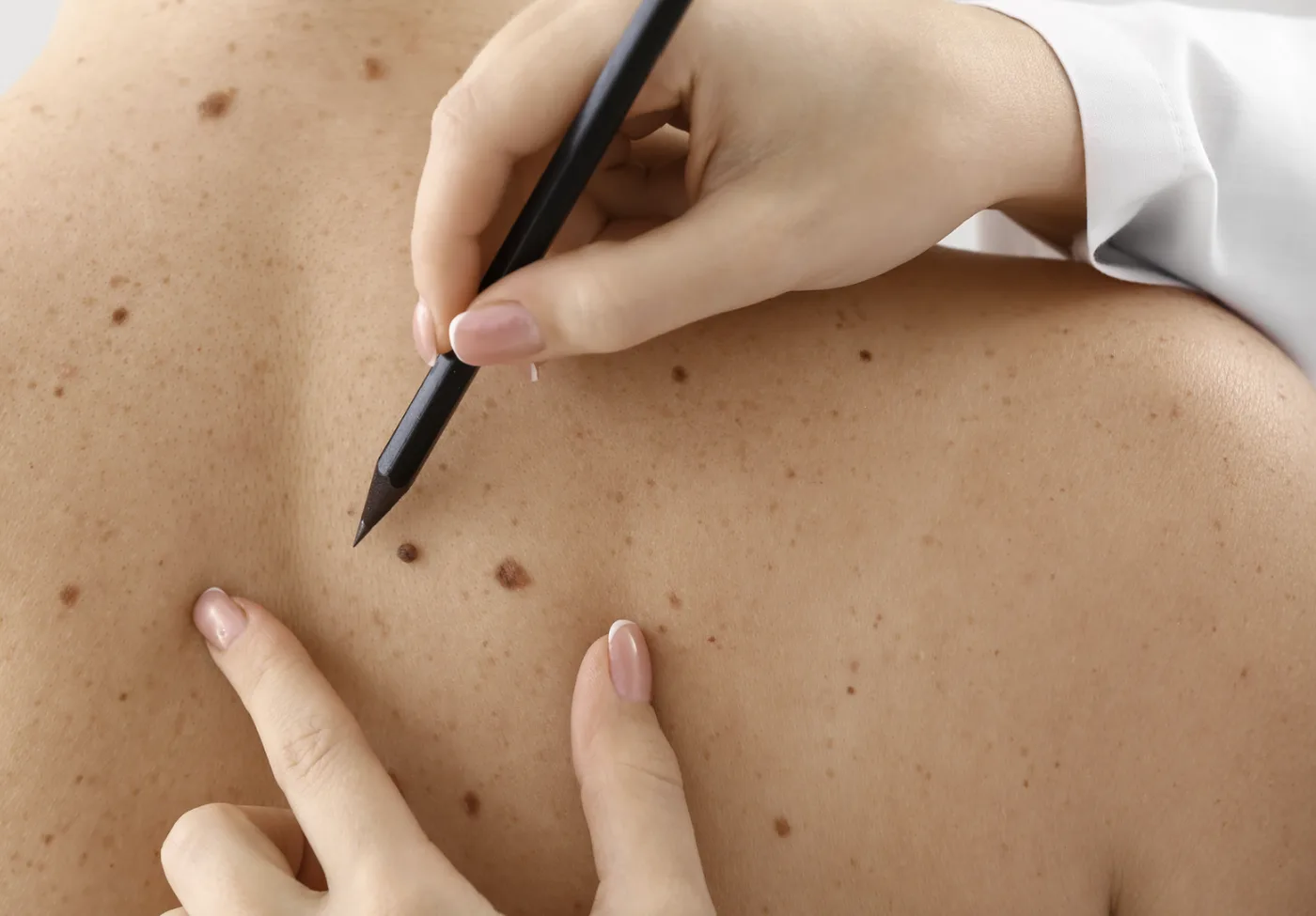
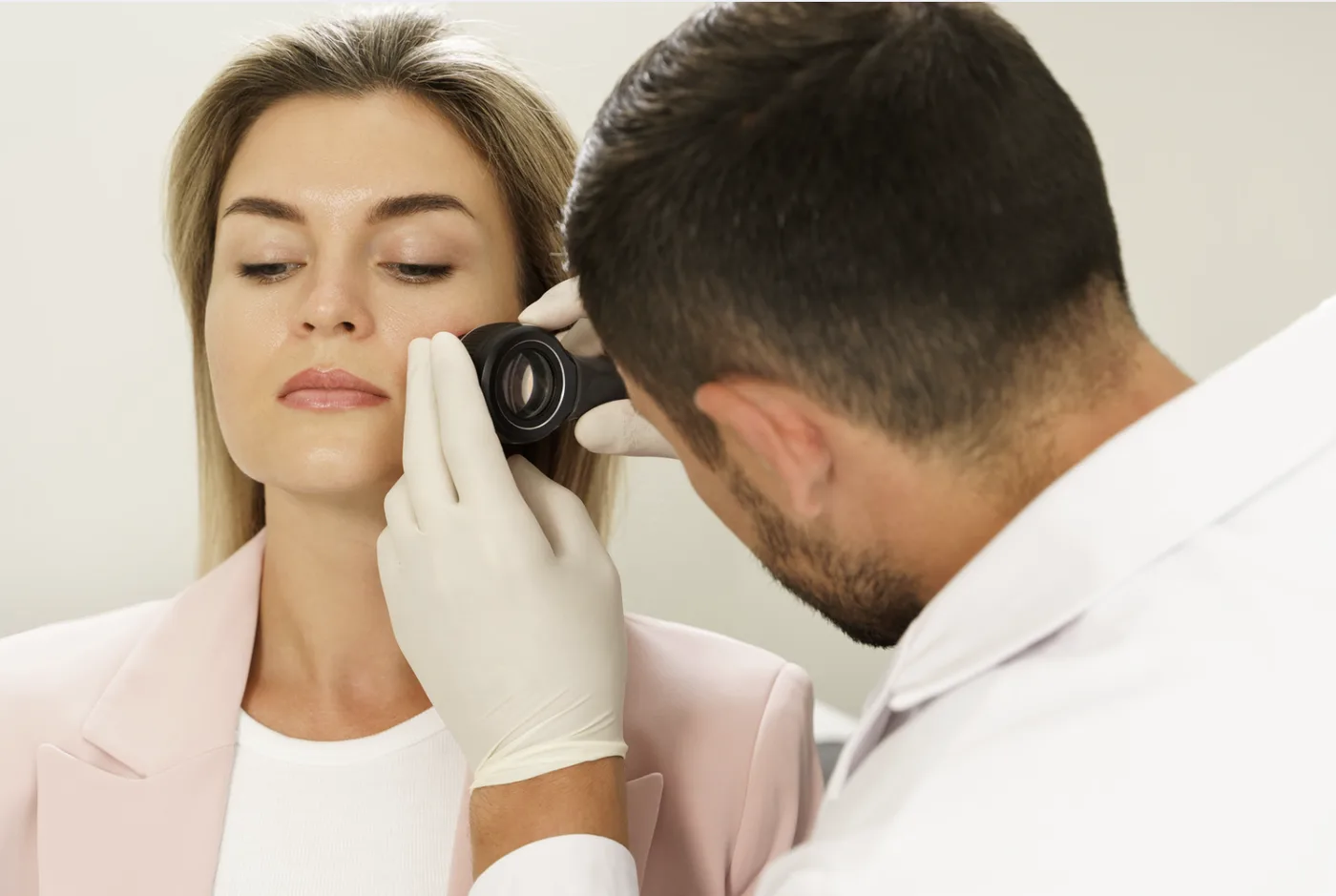
The check itself, step by step
A chat about your history
Sun exposure over your life, previous skin cancers, family history, and anything you have noticed yourself. This tells your doctor where to look hardest.
A head to toe examination
You undress to your underwear and your doctor works through your skin systematically with a dermatoscope, a handheld magnifier that shows what is happening beneath the surface of a spot. It picks up changes the naked eye misses. The exam is thorough but respectful, and you can choose a male or female doctor when you book.
Straight answers on the spot
Anything suspicious gets discussed there and then. You will not be left wondering. The usual options are keeping an eye on it, taking a biopsy, or removing it.
A plan before you leave
You walk out knowing exactly what happens next, whether that is nothing until your next routine check, a follow up appointment, or a procedure booked in.
What happens afterwards
All clear
Your doctor tells you when to come back for your next routine check, based on your skin and your risk.
A spot worth watching
Borderline spots are documented and rechecked at a set interval, rather than cut out unnecessarily.
A biopsy is taken
A small sample under local anaesthetic goes to pathology to confirm what the spot is. Your doctor tells you when to expect results and how you will hear from the practice.
Something needs to come off
Most excisions and minor procedures happen on site with the doctor who found the spot. See our treatments page for how that works.
Skin checks are from $145 with a Medicare rebate from $45.05 for eligible patients. See the full fee page for details.
Related reading
Nervous about your first skin check?
Feeling awkward about it is normal. What the appointment is really like, from walking in to walking out.
How often should Queenslanders get a skin check?
There is no single right answer, but there is a right answer for you. How doctors work out the interval.
Skin check vs mole mapping
They are not the same thing. What each one involves, who actually needs which, and what to book.
Tradies and outdoor workers: your skin takes the hit
Outdoor workers cop far more UV than the rest of us. What that means for how often you should be checked.
Ready when you are
If it has been more than a year, or you have never had a skin check, book in and get it done properly.