
The three main types of skin cancer
Most skin cancers are very treatable when they are found early. Knowing roughly what each type looks like is worth five minutes of your time.
What to look for
Melanoma
THE MOST DANGEROUS
Can spread to other parts of the body if it is not caught early. Often shows up as a new spot, or an existing mole that changes in size, shape or colour. It can appear anywhere on the body, not just skin that gets sun.
Basal cell carcinoma
THE MOST COMMON
Usually a pearly lump or a scaly, pale patch that grows slowly. It very rarely spreads, but it keeps growing where it is, and the longer it is left the more involved the treatment becomes.
Squamous cell carcinoma
NEEDS ATTENTION
Usually a thickened, red, scaly spot or a sore that will not heal, on skin that gets a lot of sun. It grows over months and can spread if it is ignored.
Sunspots, age spots and plenty of other harmless marks can look worrying too. A doctor with a dermatoscope can usually tell the difference in seconds, which beats months of quiet wondering.
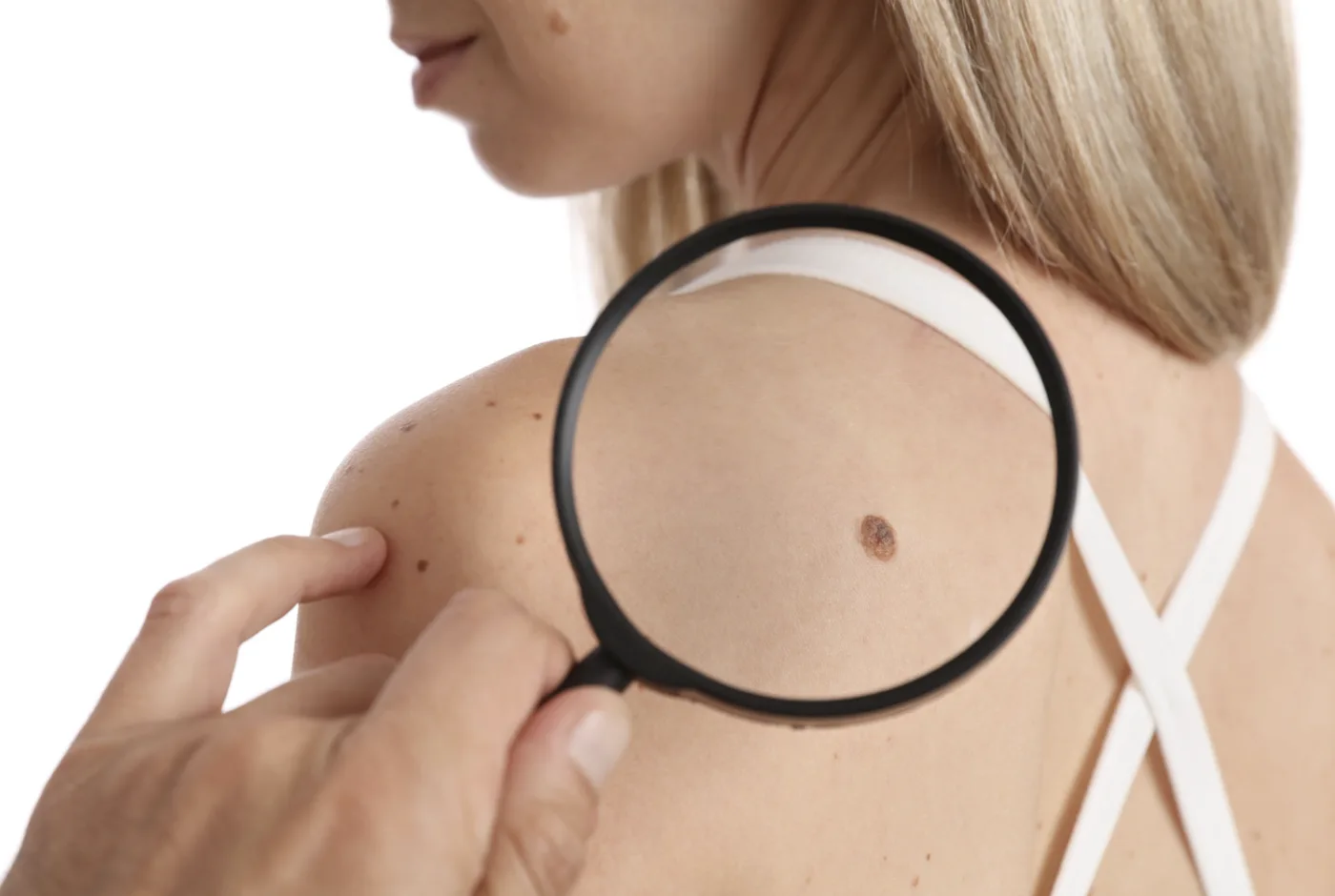
The ABCDE guide for moles
Doctors use this checklist for melanoma, and it works just as well as a prompt for checking your own moles.
Asymmetry
One half of the spot does not match the other.
Border
Edges that are irregular, ragged or blurred.
Colour
More than one colour in the spot, or a colour that is changing.
Diameter
Bigger than about 6mm, or clearly growing.
Evolving
Changing in size, shape, colour or height, or starting to itch, bleed or crust.
Use this as a prompt to get checked, not a diagnosis. Plenty of harmless spots break one of these rules, and some melanomas break none of them.
Checking your own skin between visits
Look over your skin every few months
Use a full length mirror in good light, and a hand mirror or another person for your back, scalp and other hard to see places.
Photograph anything you are unsure of
A quick phone photo next to a ruler or coin makes it easy to tell later whether a spot has actually changed.
Do not sit on a changing spot
If a spot is new, changing or just does not look right, book in. Do not wait for your next routine check to mention it.
Self checks are a backup, not a substitute. A dermatoscope in trained hands picks up changes that are invisible to the naked eye, which is the whole point of a professional skin check.
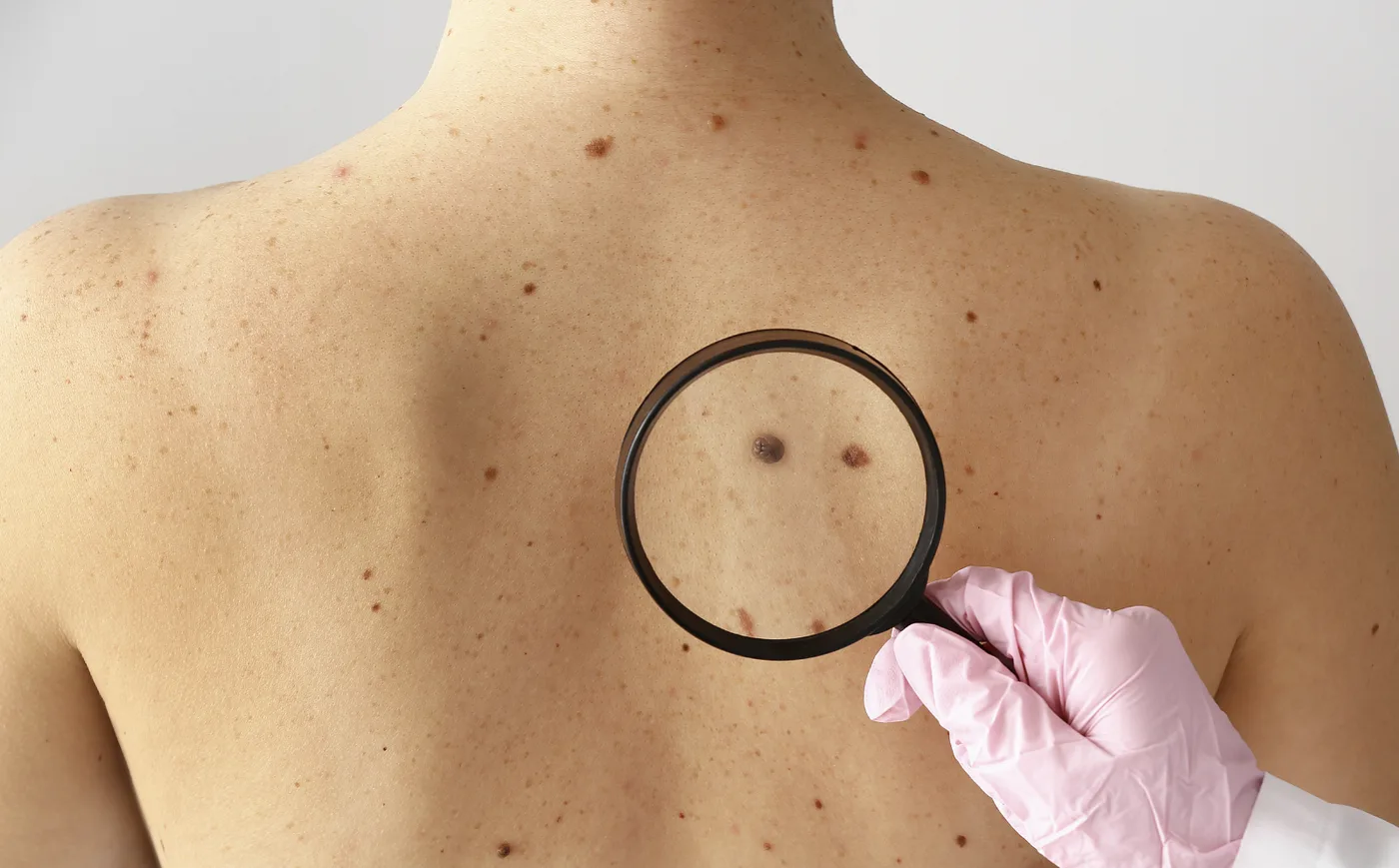
Noticed something on this page that sounds familiar?
Then that is your answer. Book a skin check and get a proper look at it this week, not eventually.